
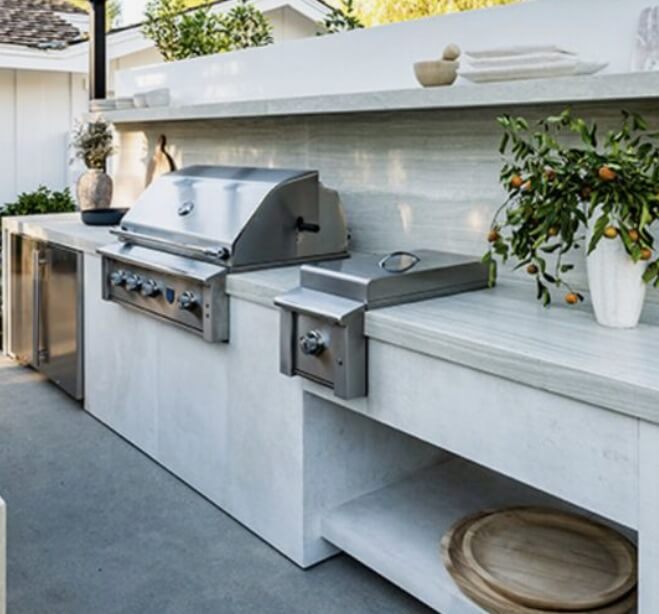
An outdoor kitchen is a prized investment that turns your backyard into a functional culinary haven for entertaining friends and family. However, constant exposure to extreme heat, rain, grease, and ambient humidity subjects your high-end appliances to severe environmental stress.
Establishing a consistent maintenance routine is essential for preserving the sleek appearance and optimal performance of your outdoor cooking setup. By adopting proper care practices, you can prevent costly mechanical breakdowns, avoid rust, and protect your long-term backyard investment.
Deep Cleaning Grill Grates and Burner Assemblies
Grills endure the heaviest workload in any outdoor setup, accumulating carbonized food particles and thick grease layers during every cooking session. Leaving residual grease on burners clogs fuel ports, creates dangerous flare-ups, and degrades heating efficiency over time.
- Scrub warm grill grates after each use with a brass or stainless steel wire brush to remove stuck food bits.
- Soaking removable stainless steel or cast iron grates in warm, soapy water removes baked-on grease traps.
- Use a thin wire or paperclip to gently clear clogged burner port holes along gas burner tubes.
- Empty and wipe clean the lower drip tray beneath the burners to eliminate fire hazards.
Keeping your primary cooking surface thoroughly scrubbed ensures safe heat distribution and prolongs the life of internal burner components.
Caring for Stainless Steel Exterior Surfaces
While stainless steel resists corrosion, airborne saltwater, humidity, and food acids can still trigger unsightly surface rust and pitting if left untreated. Regular washing removes aggressive atmospheric pollutants and maintains the bright, polished finish of your cabinets and appliance doors.
- Wash exterior panels using a mild dish soap solution mixed with warm water and a soft microfiber cloth.
- Wipe exclusively in the direction of the metal grain to prevent fine surface scratches and swirl marks.
- Apply a specialized stainless steel polish or protective oil barrier after washing to repel moisture and fingerprints.
- Avoid using bleach, ammonia, or abrasive scrubbing pads, as harsh chemicals break down the protective chromium oxide layer.
Routine surface conditioning preserves the reflective shine of stainless steel while shielding exterior metal from harsh environmental oxidation.
Maintaining Outdoor Refrigerators and Ice Makers
Outdoor refrigeration units work much harder than indoor models due to drastic ambient temperature swings and high summer humidity levels. Dirt and airborne debris clogging the ventilation condenser coils force the compressor to run constantly, leading to premature motor failure.
- Vacuum the front condenser coil grilles at least twice a year to clear dust and leaf accumulation.
- Clean interior plastic shelving and door gaskets with a food-safe mixture of baking soda and warm water.
- Inspect rubber door seals regularly for cracks to ensure an airtight lock that prevents cold air leaks.
- Flush ice maker supply lines and replace inline water filters according to seasonal manufacturer usage guidelines.
Keeping refrigeration mechanics dust-free maintains energy efficiency and keeps your beverages ice-cold during peak summer heat.
Inspecting Gas Connections and Electrical Components
Safety audits are a vital aspect of outdoor kitchen maintenance that should never be overlooked during routine cleaning sessions. Loose gas fittings, cracked supply hoses, or compromised electrical wiring pose serious hazards to your home and family.
- Apply a soapy water solution to gas hose connections and look for growing bubbles that indicate dangerous leaks.
- Inspect rubber fuel lines for cracks, stiffness, or signs of rodent damage before lighting your appliances.
- Wipe down electronic ignition modules and replace dead internal batteries to ensure smooth burner startup.
- Verify that ground fault circuit interrupter outlets near sink stations remain dry and fully operational.
Conducting routine safety checks eliminates gas leak risks and guarantees that your electronic igniters perform reliably every time.
Winterizing Appliances for Cold Season Protection
Severe winter temperatures, freezing rainfall, and heavy snow accumulation can crack water lines and permanently damage delicate appliance electronics. Taking proactive seasonal precautions shields your equipment from thermal shock and winter rust.
- Turn off gas supply valves and disconnect portable fuel tanks before storing them in safe outdoor zones.
- Shut off main water supply lines to sinks and ice makers, draining pipes completely to prevent burst lines.
- Deep clean all interior appliance compartments to remove food residue that attracts winter pests.
- Cover individual appliances with custom-fit, breathable, waterproof vinyl covers to block moisture and ice.
Proper winterization shields sensitive mechanical components from freezing weather and ensures a smooth startup when spring arrives.
Protecting the Integrity and Value of Your Outdoor Space
Caring for your outdoor kitchen appliances through disciplined maintenance safeguards your financial investment while elevating your open-air cooking experience. From scrubbing grill grates to winterizing water lines, proactive attention prevents premature wear and keeps every component operating like new.
Committing to a simple maintenance schedule offers complete peace of mind and keeps your backyard retreat looking pristine. Prioritize these practical care routines today so you can cook with confidence and enjoy memorable outdoor meals for years to come.