
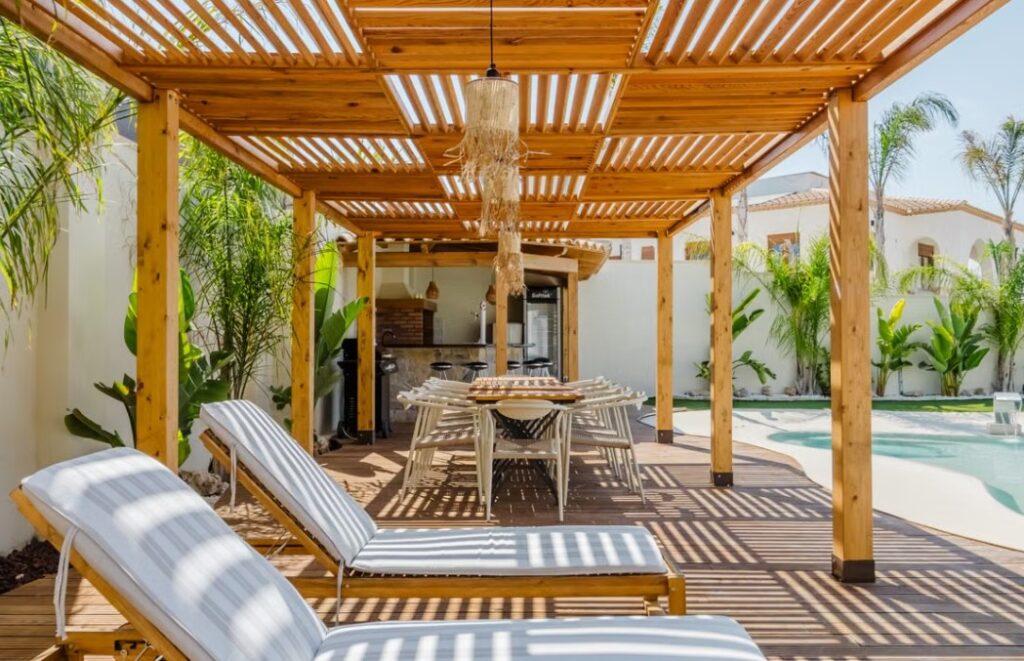
Adding a patio cover is an excellent way to extend your outdoor living space and shield your deck from the elements. However, selecting the wrong material for your specific regional weather can lead to premature wear and costly repairs.
A structure built for a dry desert environment will face completely different challenges than one erected in a snowy or humid region. Understanding how different materials interact with your local climate is the key to ensuring your investment lasts for decades.
Managing Intense Heat and Sun Exposure
When your backyard deals with blistering summer temperatures and relentless UV rays, your primary goal is finding a material that reflects heat and resists fading.
- Aluminum covers work exceptionally well in sunny regions because they reflect solar radiation rather than absorbing it.
- Insulated laminated panels offer a thick foam core that prevents heat from radiating downward onto your seating area.
- Light-colored vinyl options provide excellent UV resistance without requiring frequent repainting or sealing.
Selecting a sun-ready material keeps your outdoor living space significantly cooler even during the hottest July afternoons.
Combating High Humidity and Heavy Rainfall
Regions that experience frequent downpours and constant moisture require non-porous materials that absolutely refuse to rot or harbor mold.
- Vinyl patio covers are completely waterproof and will never warp, split, or decay when exposed to wet weather.
- Alumawood provides the beautiful look of traditional timber but features a durable aluminum core that shrugs off water damage.
- Stainless steel fasteners and aluminum frames prevent the unsightly rust streaks that often ruin structures in damp environments.
Prioritizing moisture resistance prevents structural degradation and keeps your outdoor retreat looking pristine through every rainy season.
Enduring Heavy Snow and Freezing Winter Temperatures
If you live in a northern climate, your overhead structure must be strong enough to support massive weight loads and withstand freeze-thaw cycles.
- Solid wood beams offer unmatched structural strength capable of holding hundreds of pounds of packed snow.
- Heavy-gauge aluminum structures designed with reinforced posts ensure the roof will not buckle under winter pressure.
- Sloped roof designs encourage snow and ice to slide off safely before it can accumulate to dangerous levels.
Investing in a structurally reinforced cover gives you total peace of mind when winter storms hit your neighborhood.
Resisting Coastal Salt Air and High Winds
Coastal environments present a unique dual threat of corrosive salt spray and sudden, powerful ocean gusts.
- High-grade vinyl stands up perfectly to salty sea air because it contains zero metallic components that could corrode.
- Powder-coated aluminum finishes add an extra layer of defense that shields the underlying metal from brackish moisture.
- Freestanding structures anchored deep into concrete footings provide the necessary wind resistance to survive coastal storms.
Choosing corrosion-resistant materials ensures your seaside oasis remains beautiful without requiring constant scraping and refinishing.
Balancing Maintenance and Aesthetics for Moderate Climates
Homeowners blessed with mild, predictable weather have the luxury of choosing materials based mostly on personal style and upkeep preferences.
- Natural wood options like cedar or redwood offer unmatched warmth and beauty if you do not mind occasional staining.
- Louvered roof systems allow you to adjust the overhead slats to welcome gentle breezes or block occasional light showers.
- Low-maintenance composites provide a happy medium by delivering a wood-like appearance with minimal cleaning requirements.
When the weather is cooperative, your choice ultimately comes down to how much time you want to spend on home upkeep.
Weatherproofing Your Ultimate Outdoor Sanctuary
Aligning your material choice with your regional climate ensures your patio cover remains both beautiful and safe for years to come. Taking the time to evaluate your local weather patterns protects your home investment from unnecessary environmental wear.
Consulting with experienced local builders can help you navigate the unique challenges of your area’s climate quirks. With the right foundation in place, your outdoor room will stand strong against whatever Mother Nature throws its way.